.webp)


Over ninety percent of American organizations face growing challenges in meeting governance, risk, and compliance demands. As regulations tighten and business complexity increases, understanding GRC core concepts is crucial for any company that wants to stay competitive and avoid costly missteps. This guide breaks down the essentials of GRC, highlighting practical frameworks, powerful technologies, and key roles that help American enterprises manage risk while building trust and resilience.
Table of Contents
- Defining GRC Risk Compliance Core Concepts
- Main Types And Frameworks In GRC Compliance
- How Enterprise GRC Compliance Platforms Work
- Key Stakeholder Roles And Responsibilities
- Common Pitfalls And Risk Management Essentials
Key Takeaways
Defining GRC Risk Compliance Core Concepts
Governance, Risk Management, and Compliance (GRC) represents a strategic framework that enables organizations to align complex operational processes with overarching business objectives. At its core, GRC provides a structured approach to managing an enterprise’s governance, risk mitigation, and regulatory adherence in a cohesive, integrated manner. Understanding the GRC framework requires breaking down its three fundamental components: governance, risk management, and compliance.
Governance establishes the foundational rules, practices, and processes by which an organization is directed and controlled. This component focuses on creating accountability mechanisms, defining decision-making protocols, and ensuring transparent leadership structures that guide strategic objectives. Key governance elements include board oversight, organizational policies, ethical standards, and clear communication channels that promote responsible management.
The risk management dimension of GRC involves systematically identifying, assessing, and mitigating potential threats that could disrupt business operations or strategic goals. This involves developing comprehensive risk assessment methodologies, creating risk mitigation strategies, and implementing robust monitoring systems. Organizations utilize risk management techniques to proactively anticipate challenges across financial, operational, technological, and strategic domains.
Compliance represents the final pillar, ensuring that organizational practices adhere to external regulations and internal policy standards. This component demands rigorous documentation, continuous monitoring, and implementation of control frameworks that demonstrate regulatory alignment. By integrating comprehensive GRC solutions, businesses can transform compliance from a reactive obligation into a strategic advantage that builds stakeholder trust and operational resilience.
Main Types and Frameworks in GRC Compliance
GRC frameworks represent sophisticated strategic approaches that organizations deploy to manage complex governance, risk, and compliance requirements. Comprehensive GRC frameworks provide structured methodologies that enable businesses to integrate policies, procedures, and controls into a cohesive operational strategy. These frameworks are not one-size-fits-all solutions but adaptive systems tailored to specific organizational needs and industry standards.
Several prominent GRC frameworks have emerged as industry standards, each offering unique approaches to managing organizational risk and compliance. The COSO Internal Control Framework focuses on financial reporting and operational effectiveness, while the COBIT Framework provides technology-specific governance guidelines. The ISO 31000 Risk Management Framework offers a universal approach to risk assessment and mitigation, emphasizing systematic identification and strategic response to potential organizational threats.
Effective GRC frameworks typically incorporate several critical components that work synergistically. Risk management processes involve continuous assessment, monitoring, and mitigation strategies. Compliance mechanisms ensure adherence to regulatory requirements through robust documentation and control implementations. Governance structures establish clear accountability mechanisms, defining roles, responsibilities, and decision-making protocols that align with organizational objectives.
Modern GRC frameworks increasingly leverage advanced technologies to enhance their effectiveness. Artificial intelligence and machine learning enable more sophisticated risk prediction, automated compliance monitoring, and real-time analysis of potential organizational vulnerabilities. By integrating advanced GRC tools, businesses can transform compliance from a reactive obligation into a proactive strategic advantage that drives operational resilience and builds stakeholder confidence.
How Enterprise GRC Compliance Platforms Work
Enterprise GRC platforms represent sophisticated technological ecosystems designed to streamline organizational governance, risk management, and compliance processes. Advanced enterprise GRC platforms integrate complex operational workflows into unified systems that enable real-time monitoring, automated reporting, and comprehensive risk assessment across multiple organizational domains.

These platforms typically consist of interconnected core modules that work synergistically to manage different aspects of organizational risk and compliance. Comprehensive GRC modules include critical components such as compliance management, risk assessment, audit tracking, and incident response mechanisms. Each module performs specialized functions while maintaining seamless communication and data sharing, allowing organizations to develop a holistic approach to managing regulatory requirements and potential operational vulnerabilities.
The technological architecture of enterprise GRC platforms leverages advanced data integration techniques, artificial intelligence, and machine learning algorithms to provide dynamic risk analysis and predictive insights. These platforms collect and analyze data from multiple sources, creating comprehensive dashboards that enable executive leadership to make informed strategic decisions. By centralizing governance processes, organizations can reduce redundant workflows, minimize compliance risks, and establish more transparent accountability structures.
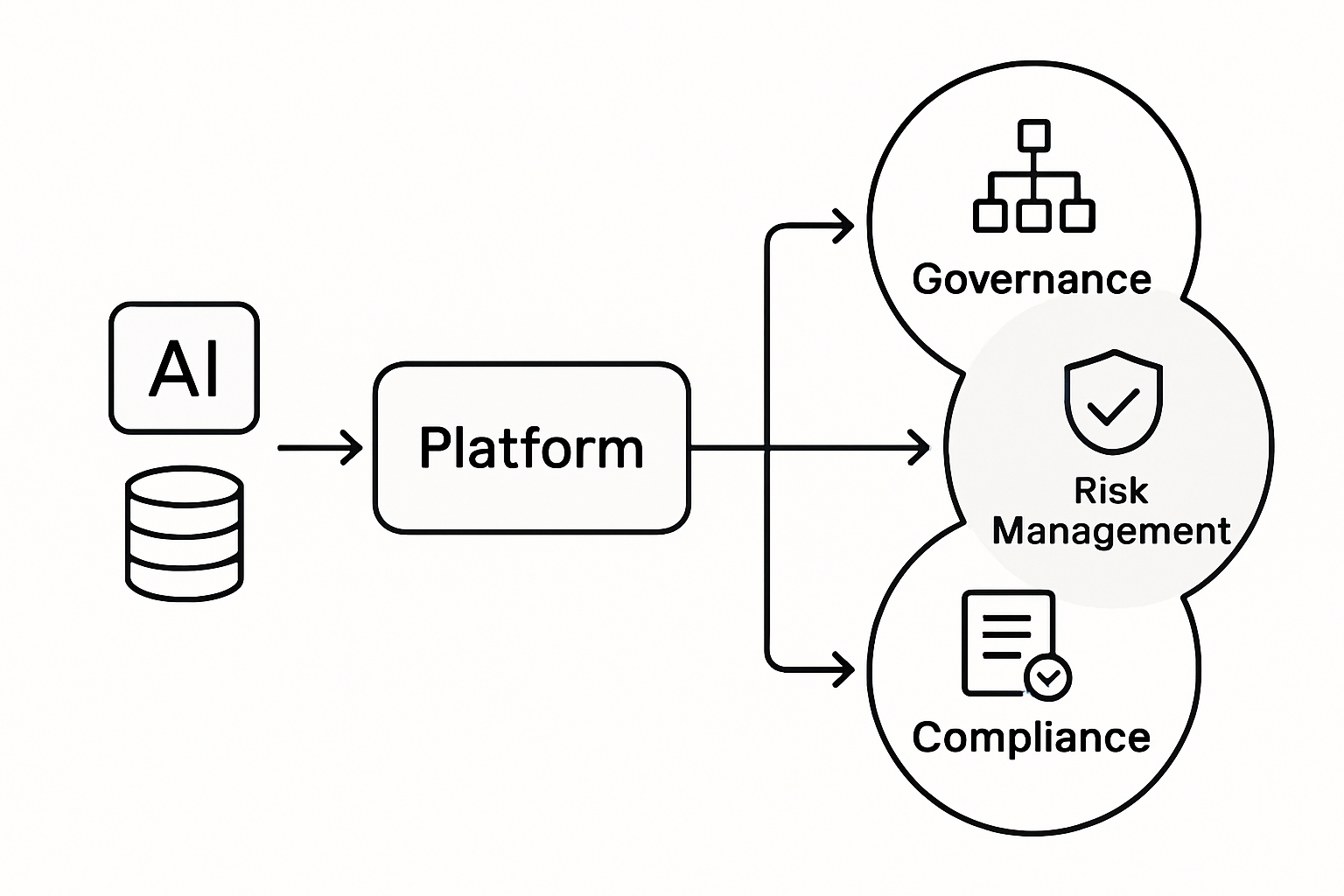
Implementing an effective enterprise GRC platform requires careful strategic planning and alignment with organizational objectives. GRC compliance software solutions enable businesses to transform complex regulatory challenges into structured, manageable processes. Modern platforms go beyond traditional compliance tracking by providing adaptive frameworks that can evolve with changing regulatory landscapes, technological advancements, and emerging industry standards.
Key Stakeholder Roles and Responsibilities
GRC stakeholder roles represent a complex ecosystem of interconnected responsibilities that ensure organizational integrity, risk management, and regulatory compliance. Each stakeholder plays a critical function in maintaining a comprehensive governance framework that protects the organization’s strategic objectives and operational resilience.
The executive leadership serves as the strategic architect of GRC initiatives, establishing high-level governance policies and setting organizational risk tolerance. Chief Executive Officers (CEOs) and Chief Financial Officers (CFOs) provide strategic direction, while Chief Information Security Officers (CISOs) translate these strategic mandates into actionable security and compliance protocols. These senior leaders are responsible for creating a culture of transparency, accountability, and proactive risk management throughout the organizational hierarchy.
Operational stakeholders such as risk managers and compliance officers function as the tactical implementers of GRC strategies. Risk managers conduct comprehensive risk assessments, identify potential vulnerabilities, and develop mitigation strategies. Compliance officers ensure that organizational practices adhere to industry regulations, legal requirements, and internal policies. They develop robust documentation, monitor regulatory changes, and implement control mechanisms that prevent potential violations and minimize organizational exposure to potential penalties.
Technical stakeholders, including IT security professionals and data governance specialists, provide the technological infrastructure that supports GRC objectives. These teams design and implement advanced security controls, develop secure information systems, and create technical frameworks that enable real-time monitoring and reporting. GRC compliance software solutions increasingly rely on these technical experts to integrate artificial intelligence, machine learning, and advanced analytics into risk detection and prevention strategies.
Common Pitfalls and Risk Management Essentials
Enterprise risk management strategies often encounter significant challenges that can undermine organizational resilience and strategic effectiveness. The most prevalent pitfalls emerge from fragmented approaches, communication breakdowns, and inadequate technological integration that prevent comprehensive risk assessment and mitigation.
One critical challenge is organizational siloed operations, where different departments operate in isolation, preventing holistic risk understanding. This fragmentation creates blind spots in risk detection and reduces the organization’s ability to respond quickly to emerging threats. Risk assessment methodologies must transcend departmental boundaries, establishing cross-functional communication channels and integrated risk monitoring systems that enable real-time threat detection and collaborative response mechanisms.
Technological limitations represent another significant obstacle in effective risk management. Many organizations struggle with outdated risk assessment tools, manual compliance processes, and insufficient data analytics capabilities. Modern risk management requires advanced technological infrastructure that supports automated compliance checks, predictive risk modeling, and dynamic threat intelligence gathering. Artificial intelligence and machine learning technologies can transform risk management from a reactive to a proactive discipline, enabling organizations to anticipate and mitigate potential vulnerabilities before they escalate.
GRC risk management strategies must prioritize continuous learning, adaptability, and technological innovation. Successful organizations develop robust risk frameworks that incorporate regular risk assessments, comprehensive training programs, and agile response protocols. By creating a culture of risk awareness and implementing sophisticated technological solutions, businesses can transform potential vulnerabilities into strategic opportunities for organizational growth and resilience.
Harness the Power of AI to Transform Your GRC Risk Compliance
Navigating the complexities of Governance, Risk Management, and Compliance can leave organizations burdened by manual processes and fragmented communication. This article highlights common pain points such as siloed operations, slow risk assessments, and the challenge of integrating diverse compliance frameworks. Skypher offers a breakthrough with its AI Questionnaire Automation Tool designed specifically to accelerate and streamline security questionnaires, helping you overcome these exact challenges with precision and speed.

Experience how Skypher’s platform empowers tech and finance enterprises to:
- Complete hundreds of security questions in under a minute using proprietary AI models
- Integrate seamlessly with popular third-party risk management platforms like ServiceNow and OneTrust
- Collaborate in real time through Slack or Microsoft Teams integrations
Elevate your GRC compliance strategy by visiting Skypher today. Unlock smarter automation, improve operational productivity, and build stronger trust with stakeholders now. Discover the full potential of our AI Questionnaire Automation Tool and GRC compliance software solutions that turn complex regulatory demands into a competitive advantage.
Frequently Asked Questions
What is the GRC framework?
The GRC framework stands for Governance, Risk Management, and Compliance. It provides a structured approach for organizations to align their operational processes with business objectives, ensuring effective governance, risk mitigation, and regulatory adherence.
What are the main components of GRC?
The main components of GRC are governance, risk management, and compliance. Governance establishes accountability and decision-making protocols, risk management involves identifying and mitigating potential threats, and compliance ensures adherence to regulatory standards.
How do enterprise GRC platforms work?
Enterprise GRC platforms streamline governance, risk management, and compliance processes by integrating various operational workflows into unified systems. They enable real-time monitoring, automate reporting, and provide comprehensive risk assessments across organizational domains.
What are common pitfalls in GRC risk management?
Common pitfalls in GRC risk management include siloed operations that hinder cross-department communication, outdated technological tools that limit risk assessment capabilities, and inadequate integration of risk management strategies that prevent comprehensive threat response.
Recommended
- GRC Solutions Explained: Streamlining Compliance and Risk
- Understanding the GRC Framework: Key Concepts Explained
- Complete Guide to GRC Compliance Software Solutions
- Cybersecurity GRC: Essential Strategies for 2025 Success