.webp)


Most American businesses underestimate how challenging GDPR compliance can be. With over 50 percent of organizations misunderstanding software capabilities or regulatory needs, even experienced teams face setbacks. The fast-evolving privacy landscape leaves little room for error if you want to keep up with European data standards. This guide breaks down the essentials of GDPR compliance software, clears up myths, and offers practical insights for anyone navigating regulations in an increasingly digital world.
Table of Contents
- GDPR Compliance Software Basics And Misconceptions
- Core Features Enabling Automated Compliance
- Integration With Risk Management Platforms
- Legal Responsibilities And Documentation Workflows
- Common Pitfalls In GDPR Software Adoption
Key Takeaways
GDPR Compliance Software Basics and Misconceptions
Understanding GDPR compliance software requires navigating complex regulatory landscapes where technological solutions intersect with legal requirements. Software compliance research reveals critical nuances in managing data privacy across organizational ecosystems.
Open source developers increasingly recognize the intricate challenges posed by data protection regulations. Research from academic studies indicates that GDPR policies significantly complicate software development processes, introducing substantial user data management complexities. Organizations now require sophisticated tools that can automatically assess, track, and document data handling practices while maintaining regulatory alignment.
Common misconceptions about GDPR compliance software often stem from oversimplified understanding of its capabilities. Many organizations mistakenly believe these tools are one-size-fits-all solutions, when in reality, they require customized configurations tailored to specific business contexts. Effective GDPR compliance platforms must offer:
- Automated data mapping and inventory tracking
- Real-time privacy impact assessment capabilities
- Comprehensive consent management mechanisms
- Robust data subject rights request processing
- Granular access control and permission management
Successful implementation demands more than technological tools. Data security best practices emphasize the critical role of organizational culture, employee training, and continuous monitoring in achieving meaningful regulatory compliance.
Core Features Enabling Automated Compliance
Automated compliance platforms transform complex regulatory requirements into streamlined technological processes, enabling organizations to manage data privacy with unprecedented efficiency. Governance, Risk, and Compliance (GRC) solutions now offer sophisticated tools that bridge technological capabilities with regulatory mandates.
potential compliance risks in real time, and generate

The core architecture of effective compliance automation centers on several critical technological capabilities. These platforms must integrate advanced data discovery, mapping, and classification technologies that can automatically scan, categorize, and track sensitive information across diverse organizational ecosystems. Intelligent systems now leverage machine learning algorithms to continuously monitor data flows, identifying potential compliance risks in real-time and generating comprehensive audit trails.
Key features that distinguish superior GDPR compliance platforms include:
- Intelligent Data Mapping
- Automatic discovery of personal data repositories
- Cross-system data relationship tracking
- Contextual data sensitivity classification
- Consent Management
- Granular user consent tracking
- Automated consent withdrawal mechanisms
- Multilingual consent recording
- Privacy Impact Assessment
- Automated risk scoring
- Comprehensive regulatory checklist generation
- Predictive compliance vulnerability detection
Successful implementation requires more than technological solutions. Strategic GRC audit approaches emphasize the critical importance of integrating technological tools with robust organizational processes, ensuring that compliance becomes a holistic, proactive strategy rather than a reactive checklist.
Integration With Risk Management Platforms
Risk management platforms represent a critical infrastructure for organizations seeking comprehensive data privacy and regulatory compliance. Vendor risk management strategies have evolved dramatically, transforming how businesses assess and mitigate potential technological vulnerabilities.
Successful integration between GDPR compliance software and risk management platforms requires sophisticated architectural approaches that enable seamless data exchange and comprehensive risk assessment. Modern platforms leverage advanced APIs and standardized communication protocols to create interconnected ecosystems where compliance data can be dynamically shared, analyzed, and monitored across multiple organizational systems.
Key considerations for effective platform integration include:
- Data Synchronization
- Real-time risk profile updates
- Automated compliance status tracking
- Unified reporting mechanisms
- Security Protocol Alignment
- Multi-factor authentication integration
- End-to-end encryption standards
- Consistent access control frameworks
- Comprehensive Risk Assessment
- Continuous vulnerability scanning
- Predictive risk modeling
- Automated compliance gap identification
Implementing robust vendor management programs requires a holistic approach that transcends traditional technological boundaries. Organizations must develop adaptive strategies that allow dynamic interaction between compliance tools and risk management platforms, ensuring a proactive and responsive regulatory environment.
Legal Responsibilities and Documentation Workflows
GDPR compliance demands meticulous documentation workflows that transform legal responsibilities into structured, actionable processes. Workflow automation technologies enable organizations to systematically manage complex regulatory requirements with unprecedented precision.
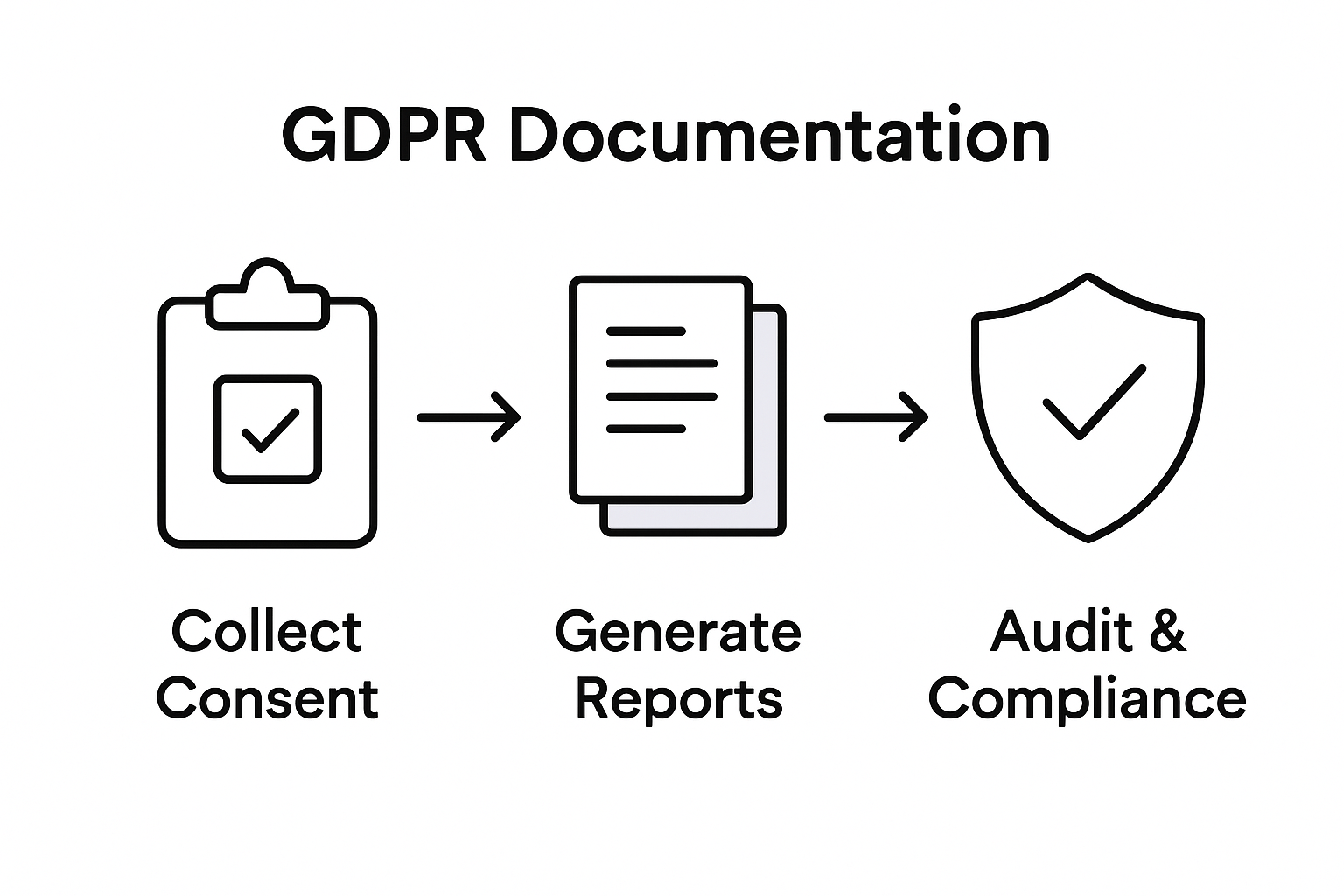
Recent advancements in artificial intelligence have revolutionized legal documentation management. Automated policy completeness checking technologies now provide sophisticated mechanisms for ensuring that privacy policies comprehensively address GDPR provisions, dramatically reducing human error and compliance risks. These intelligent systems can analyze documentation against intricate regulatory frameworks, flagging potential gaps or inconsistencies in real-time.
Critical components of effective legal documentation workflows include:
- Comprehensive Policy Generation
- Automated template creation
- AI-driven compliance verification
- Dynamic policy adaptation mechanisms
- Regulatory Documentation Management
- Centralized document repositories
- Version control tracking
- Automated compliance update notifications
- Legal Responsibility Mapping
- Clear accountability assignment
- Detailed consent management records
- Transparent data processing documentation
Innovative AI-powered tools are transforming how organizations generate and manage GDPR-compliant policies, enabling more efficient and accurate legal documentation processes that adapt dynamically to evolving regulatory landscapes.
Common Pitfalls in GDPR Software Adoption
GDPR software adoption presents complex challenges that organizations must strategically navigate to ensure effective data privacy management. Data privacy best practices reveal critical insights into avoiding common implementation mistakes that can compromise regulatory compliance.
Open-source development research highlights significant engineering challenges in GDPR compliance, demonstrating that many organizations underestimate the complexity of implementing comprehensive data protection strategies. Developers frequently encounter increased development activities and negative perceptions, indicating a profound need for more sophisticated support tools and resources that can simplify regulatory adherence.
Critical pitfalls organizations must carefully address include:
- Inadequate Scope Understanding
- Partial compliance assessments
- Overlooking cross-border data transfers
- Incomplete data mapping processes
- Technical Implementation Failures
- Insufficient user consent mechanisms
- Weak data anonymization techniques
- Incomplete audit trail documentation
- Resource and Training Gaps
- Limited staff technical capabilities
- Lack of continuous compliance education
- Minimal investment in specialized tools
Successful GDPR software adoption requires a holistic approach that transcends technological solutions. Cybersecurity governance strategies emphasize the critical importance of creating a comprehensive cultural framework that integrates technological tools with robust organizational processes and ongoing staff training.
Simplify GDPR Compliance with Skypher’s AI-Powered Automation
Managing GDPR compliance software involves navigating complex data privacy requirements and integrating risk management strategies. The challenges of automated data mapping, consent management, and privacy impact assessments demand a solution that not only keeps pace but also streamlines workflows across your organization. Skypher offers a powerful SaaS platform designed to tackle these exact pain points through intelligent questionnaire automation and real-time collaboration.

Experience how Skypher’s AI Questionnaire Automation Tool can accelerate your GDPR compliance efforts by automating responses to security questionnaires with unprecedented speed and accuracy. Integrate effortlessly with over 40 third-party risk management platforms, enabling seamless data synchronization and robust consent tracking. Visit Skypher now to transform your regulatory processes and gain comprehensive control over data privacy management. Explore how our AI-driven tools and customizable Trust Center can empower your teams to reduce compliance risks and enhance operational efficiency today.
Learn more about how to streamline GRC audit processes and implement vendor risk management strategies that integrate effortlessly with your compliance workflows.
Frequently Asked Questions
What core features should GDPR compliance software include?
Effective GDPR compliance software should offer features such as automated data mapping, real-time privacy impact assessments, comprehensive consent management, data subject rights request processing, and granular access control management.
How does automated compliance software streamline data privacy management?
Automated compliance software transforms complex regulatory requirements into streamlined processes, allowing organizations to efficiently manage data privacy through features like intelligent data mapping and real-time risk monitoring.
What are common pitfalls organizations face when adopting GDPR software?
Common pitfalls include inadequate understanding of compliance scope, technical implementation failures, insufficient user consent mechanisms, and gaps in staff training and resources.
How can GDPR compliance software integrate with risk management platforms?
GDPR compliance software can integrate with risk management platforms by utilizing advanced APIs for seamless data exchange, enabling real-time risk updates, automated compliance status tracking, and unified reporting mechanisms.
Recommended
- 7 Essential Data Privacy Best Practices for B2B Teams
- Complete Guide to Software Compliance Software
- Complete Guide to GRC Compliance Software Solutions
- GRC Solutions Explained: Streamlining Compliance and Risk
- Understanding Employee Privacy Policies in Canada - Probe IT
- Marketing Compliance for Dentists: Complete Guide | Ibrandmedia